Merry Cat Embroidery: A Designer’s Real-World Review
First Impressions: Whimsy with Wearability
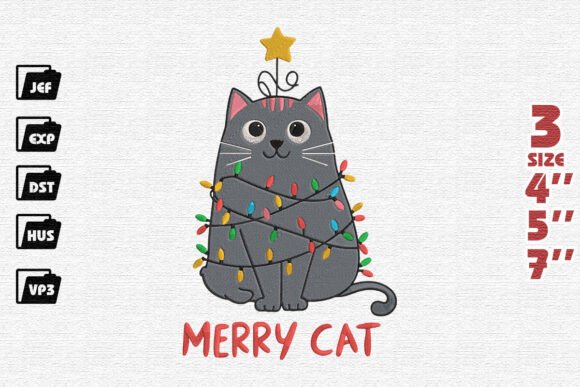
When I opened the Merry Cat Embroidery file, what struck me wasn’t just the charm—it was the intentionality. This isn’t a cluttered holiday motif or an over-stuffed “cat + tree” mashup. It’s clean, balanced, and quietly clever: a stylized cat curled around a tiny Christmas tree, tail forming the trunk, paws cradling ornaments. The shape reads instantly at 3–4 inches wide—ideal for a sweatshirt chest logo or pillow center. It leans into playful without tipping into kitsch, which matters when you’re stitching for clients who want handmade warmth, not cartoon noise.
A Tote Bag Test Run: Where Personality Meets Practicality
Last week, I stitched Merry Cat Embroidery onto a natural canvas tote for a local boutique’s holiday pop-up. Used it centered on the front panel, 3.8" wide, with navy thread on oat-colored fabric. The result? Immediate smiles—and actual sales. Customers didn’t just pause; they picked it up, turned it, asked, “Is that *Catmas*?” That’s the design doing quiet work: it invites interaction while staying legible and stitch-friendly. No floating limbs, no thin branches that vanish in fill stitch, no awkward negative space that traps lint or distorts on seams. As a machine embroidery design, it breathes well—moderate stitch density, smart use of satin stitch for the cat’s outline and tree trunk, and subtle running stitch accents for ornament highlights.
Where It Shines (and Where to Pause)
Merry Cat Embroidery excels on stable, medium-weight fabrics: cotton twill aprons, brushed poly sweatshirts, linen tea towels, and structured pillow covers. It holds up beautifully on baby onesies—scaled down to 2.5"—because the core shapes are bold enough to survive gentle washing and repeated folding. As an embroidered patch, it stitches cleanly with minimal backing needed, and the proportions translate well to iron-on or sew-on applications.
That said, proceed thoughtfully on:
- Stretchy knits (like lightweight t-shirts): Use cutaway stabilizer and reduce top tension slightly—the cat’s curved silhouette can pucker if the fabric gives too much.
- Dark or textured fabrics (e.g., charcoal fleece or burlap): Test thread colors first. Lighter greens or cream for the tree read better than traditional kelly green, which can disappear. Avoid ultra-fine metallics here—they’ll get lost in the fill areas.
- Curved surfaces like caps or baby beanies: Resize to ≤2.7" and avoid placing near the crown seam. The tree’s base and cat’s paws need flat real estate to anchor cleanly.
- Tiny hoops under 4x4": You *can* shrink it—but below 2.2", the ornaments lose definition and the tail-to-trunk transition blurs. Not worth sacrificing clarity for size.
For Your Craft Business: Trust, Value, and Repeat Buyers
If you sell on Etsy or run a small shop, Merry Cat Embroidery works as both product and personality. Stitched on a neutral-toned kitchen towel? It feels curated—not seasonal clutter. On a personalized baby blanket with a name below? It elevates the whole finished product without overwhelming. Customers associate that kind of restraint with care, and care builds trust. I’ve seen buyers return specifically for “that cat tree design”—not because it’s flashy, but because it feels *hand-chosen*, not algorithm-generated.
It also plays well across branding touchpoints. Use it in your printable mockups (try light/dark background versions side-by-side), feature it in a “Holiday Handmade” email banner, or pair it with minimalist typography for a cohesive digital product listing. As design assets go, it’s versatile without being generic—a rare balance in Christmas embroidery.
Designer Notes You’ll Actually Use
Before stitching your first client piece or batch-producing holiday items, do these five things:
- Test on scrap fabric matching your final substrate—especially if using blends or eco-materials. Stitch density behaves differently on organic cotton vs. poly-cotton.
- Check thread color contrast in natural light, not just your screen. What looks crisp on a monitor may mute on oat linen or heather grey.
- Inspect small details at 100% zoom in your embroidery software: Are the ornament highlights distinct? Does the cat’s ear clear the tree branch without overlap?
- Run a black-and-white mockup to confirm readability for monochrome branding or blind-stitch applications (e.g., interior labels).
- Verify licensing terms before selling finished products or bundling Merry Cat Embroidery into digital embroidery kits. Some sellers permit commercial use; others restrict resale of stitched items—always confirm.
Final Thought: Not Just Another Holiday File
Merry Cat Embroidery doesn’t try to be everything. It’s not a mega-complex applique design with 17 thread changes, nor is it a minimalist line art sketch that fades on dark fabric. It’s a focused, joyful, technically sound embroidery file built for real projects—custom apparel, thoughtful gifts, small-batch home goods, and boutique merchandise that stands out because it feels intentional, not incidental. If your craft business values clarity over clutter, charm over chaos, and craftsmanship over copy-paste, this one earns its spot in your active design folder. Stitch it right, and it won’t just decorate your product—it’ll invite someone to pause, smile, and remember why handmade matters.